Basic Rules, Shillong Teer Result
How basic rules works for shillong teer result, UPI details, realistic timings and the pitfalls to avoid.
What is Basic Rules?
The basic rules of Shillong Teer govern how archers shoot, how results are calculated, and how players place valid bets. Administered by the Khasi Hills Archery Sports Association (KHASA), these rules are legally enforced under the Meghalaya Amusement and Betting Tax (Amendment) Act, making Shillong Teer one of the few state-sanctioned archery lotteries in India. Unlike unregulated number games found elsewhere, every element of Shillong Teer, from arrow inspection to the payout formula, operates under a published, consistent rulebook that has remained largely unchanged for decades.
- Game days: Monday to Saturday only. No Teer is held on Sundays or official Meghalaya state holidays such as Nongkrem Dance Festival days or Republic Day when declared locally.
- Two rounds per day: Every playing day consists of exactly two shooting rounds, First Round (FR) and Second Round (SR). Both rounds must be completed for results to be official. A partial day, where only FR is completed, yields only one result; SR bets are refunded in that case.
- Archer count: A minimum of 50 licensed archers must participate in each session. All archers must be registered members of KHASA. On days with high attendance, 60 to 80 archers may shoot, which directly increases the possible hit range and makes result prediction more variable.
- Arrow count per round: In the First Round, each archer shoots 30 arrows. In the Second Round, each archer shoots 20 arrows. This difference in arrow count is a core rule, it is why FR and SR carry different payout rates.
- Target distance: Archers shoot at a cylindrical straw target from a standardised distance of approximately 50 metres. The target diameter and material are specified by KHASA to ensure consistent penetration across arrow types used by different archers.
- Result calculation: The total number of arrows that successfully hit and remain embedded in the target is counted by KHASA officials. The last two digits of that count form the official result number. For example: if 847 arrows hit, the result is 47. If 1,200 arrows hit, the result is 00. If only 9 arrows hit, the result is written 09, not 9.
- Betting unit: A player picks any number from 00 to 99 and places a cash bet at a licensed Teer counter before the round's cut-off time. You may bet on multiple numbers in the same round, but each number requires a separate stake and generates a separate ticket.
- Minimum and maximum bet: The minimum stake is ₹1 per number per round. Most KHASA-affiliated counters impose a practical maximum of ₹1,000 to ₹5,000 per number per round, though KHASA itself does not publish a formal cap.
- Payout ratio, FR vs SR: A correct First Round prediction pays ₹80 per ₹1 staked. A correct Second Round prediction pays ₹60 per ₹1 staked. This 20-rupee gap exists because the SR uses fewer arrows (20 vs 30), producing a lower possible hit range. The payouts are fixed by KHASA and cannot be varied by individual counters.
Shillong Teer vs Khanapara Teer vs Juwai Teer: Shillong Teer (Polo Ground) operates under KHASA. Khanapara Teer runs in Assam under the Assam Teer Association with slightly different timing. Juwai Teer is a separate Meghalaya game run by the Jaintia Hills Archery Sports Association. All three share the "last two digits" calculation rule, but their shooting schedules, archer counts, and counter locations differ. No bet placed at a Shillong Teer counter is valid for Khanapara or Juwai results, and vice versa. Always confirm the counter's affiliation before placing a ticket to avoid disputes at payout time.
Basic Rules on Mobile
Checking Shillong Teer results on a mobile device is the primary method for the vast majority of followers outside Meghalaya. However, several platform-specific rules apply to ensure you are reading verified, official numbers rather than manipulated or stale data from unverified aggregators. There is currently no official KHASA mobile app on the Google Play Store or Apple App Store. Results are published through KHASA-affiliated result boards at Polo Ground and through established result websites such as shillongteerresult.in.net, which aggregate official data published directly after the KHASA ground announcement.

Avoid any Android APK downloaded outside the Play Store that claims to provide "live Teer results", these apps frequently display fabricated numbers before the official shoot ends.
- Timing your refresh: Refresh your browser after 4:15 PM IST for First Round results and after 5:15 PM IST for Second Round results. Result pages updated before these windows are speculative previews or yesterday's data, not official figures.
- Force-clear browser cache: Mobile browsers (Chrome on Android, Safari on iOS) aggressively cache pages. On Chrome for Android, long-press the reload icon and select "Hard Reload" or clear site data via Settings → Privacy → Clear Browsing Data → select the result site. This ensures you see today's numbers, not yesterday's cached page.
- Check the date stamp first: Before reading the result digits, confirm the date shown on the result page matches today's date. Many aggregator sites display results in a table without clearly marking the date row; scroll up to verify.
- Data usage tip: Teer result pages are lightweight (under 200 KB). You do not need a WiFi connection, a 2G or 3G signal on any Indian network (Jio, Airtel, BSNL, Vi) is sufficient to load an up-to-date result page within seconds.
- Avoid paid "result unlock" services: Some mobile sites show a blurred result and prompt users to pay via PhonePe, Google Pay (GPay), or Paytm to reveal the number. This is a scam. Official Teer results are always publicly free. No legitimate result aggregator charges a fee to display a result.
- WhatsApp result groups: Many players in Assam and Meghalaya share results in WhatsApp groups seconds after the ground announcement. While fast, WhatsApp results carry a risk of typos or deliberate misinformation. Always cross-verify against a dedicated result website before claiming a ticket.
Online betting rules and legal boundaries on mobile: Online betting is not legally permitted outside Meghalaya's licensed counter network. The Meghalaya Amusement and Betting Tax Act authorises betting only at physical, registered counters within the state. Any mobile app or website offering "online Shillong Teer betting", accepting deposits via PhonePe, GPay, BHIM, Paytm, or any UPI handle: operates outside KHASA's jurisdiction and outside Indian betting law. Players using such platforms assume full legal and financial risk, including non-payment of winnings.
Counter operators in border areas of Meghalaya may accept UPI payments from physically present customers as a payment convenience, that is not "online betting." Winning claims still require you to physically present your original stamped ticket at the counter; no counter accepts remote claims via WhatsApp photo or mobile payment transfer.
Basic Rules Safety and Timing
Official Timing Schedule
| Round | Betting Cut-off (IST) | Shooting Start (IST) | Result Declared (approx. IST) |
|---|---|---|---|
| First Round (FR) | 3:30 PM | 3:45 PM | 4:15 PM to 4:30 PM |
| Second Round (SR) | 4:30 PM | 4:45 PM | 5:15 PM to 5:30 PM |
No bets are accepted after the cut-off time. Counter operators are required by KHASA rules to close their books at exactly 3:30 PM (FR) and 4:30 PM (SR). Any counter accepting bets after these times is operating in violation of KHASA rules, winnings from an out-of-time bet are not guaranteed to be honoured. If you arrive at a counter at 3:32 PM hoping to place an FR bet, you must wait and place an SR bet instead.
The 30 to 45 minute gap between shooting end and result declaration is not administrative delay, it is mandatory triple-count verification. Three independent KHASA counters tally the arrows separately. Only when all three tallies agree is the two-digit number confirmed and released.
Archery Safety Rules at the Venue
- Spectator zone: Visitors at Polo Ground, Shillong, must remain behind the designated barricade line, at least 70 metres from the shooting line. Crossing into the range area during active shooting is strictly prohibited and enforced by KHASA stewards.
- Archer certification: Only archers holding a valid, current-year KHASA membership card may participate. No uncertified individual may shoot in an official Teer session, even as a last-minute substitute.
- Arrow inspection rule: Before each round, every archer's arrows are inspected by a designated KHASA equipment official. Non-standard arrow tips, damaged shafts, or arrows of non-regulation length are confiscated and replaced with KHASA-standard arrows. This prevents any tampering that could artificially inflate or reduce the number of arrow hits in the target, which would directly manipulate the two-digit result.
- Cancellation rule: If fewer than 50 certified archers are present at game time, the round is cancelled. Similarly, if Shillong experiences heavy monsoon rain (common June, September), poor visibility, or high winds that compromise fair shooting conditions, KHASA officials may cancel a round. In a cancellation, all bets placed at licensed counters for that round are fully refunded, players must return to their counter with the original ticket within 48 hours to claim the refund.
- Photography rule: During the official arrow-counting phase, photography and videography at the target are restricted. This rule prevents early result leaks from social media footage that could be used to manipulate late betting.
Result integrity: Results are announced verbally at Polo Ground first by a KHASA official, then relayed via phone to licensed counters across Meghalaya, and finally updated on affiliated online result pages. The ground announcement is the single, legally binding source of truth. Any result not matching the official KHASA ground announcement, regardless of which website, YouTube channel, Telegram channel, or Facebook page published it, is considered invalid and cannot be used as a basis for claiming a payout. KHASA does not issue corrections to results once officially declared at the ground; a declared result stands even if a counting error is suspected after the fact.
How Basic Rules Works
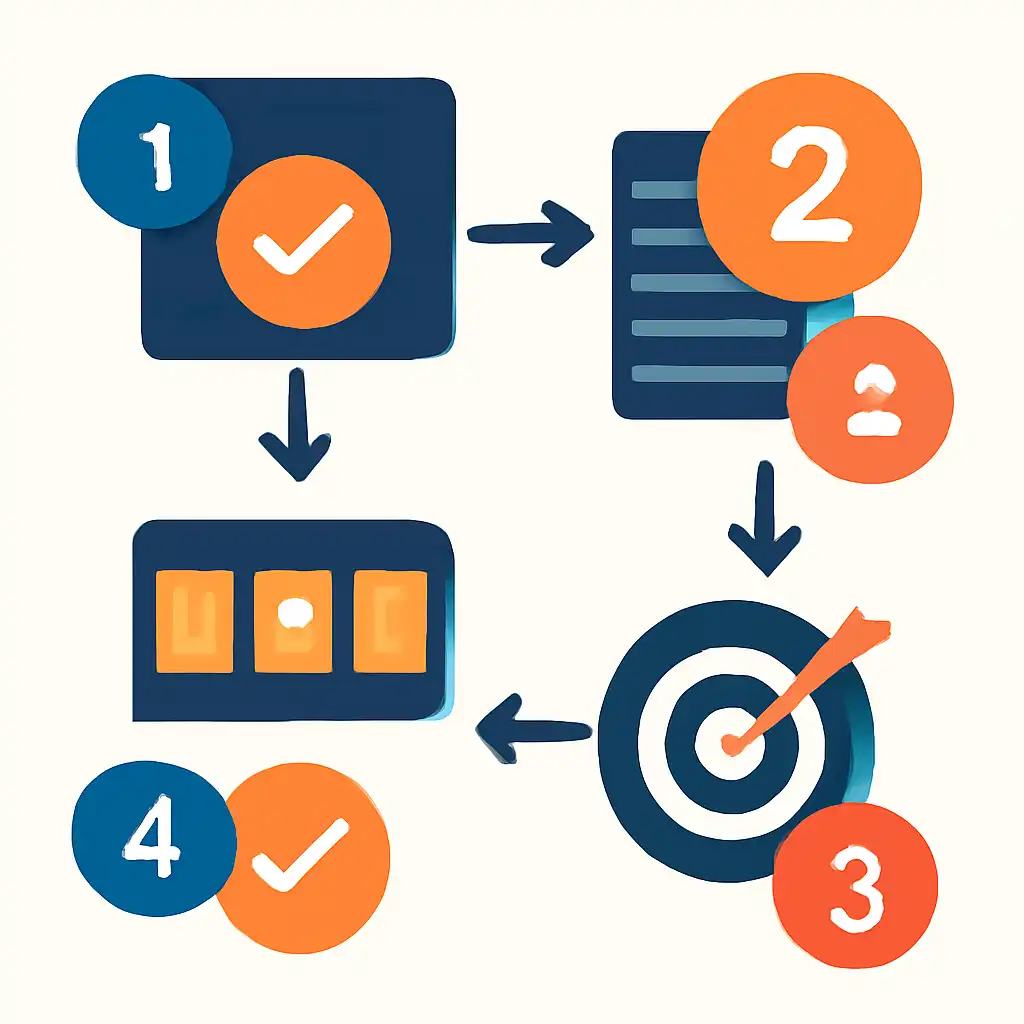
Understanding the step-by-step mechanics of how Shillong Teer's basic rules operate, from the moment a counter opens its books to the moment a winning player collects cash, removes ambiguity and protects you from making procedural mistakes that forfeit an otherwise valid win. The process follows a strict sequential order across four phases: betting, shooting, counting, and claiming.
Phase 1, Placing a Bet at a Licensed Counter
Visit any KHASA-licensed Teer counter before the cut-off time (3:30 PM for FR, 4:30 PM for SR). Tell the counter operator your chosen number (between 00 and 99) and the amount you wish to stake. The operator records the bet, accepts your cash, note that only Indian Rupee cash (INR) is formally accepted at licensed counters, though some operators in urban Shillong now accept PhonePe or GPay as a payment method for in-person customers, and issues you a physical stamped ticket.
This ticket is your only proof of bet. Keep it safe, dry, and uncreased. A damaged or illegible ticket can be rejected at the payout window even if your number wins. Bets placed verbally without a ticket have no legal standing under KHASA rules.
Phase 2, The Shoot and the Count
At shooting start (approximately 3:45 PM for FR), archers take their positions on the shooting line at Polo Ground, Shillong. Each archer in the First Round shoots exactly 30 arrows at the straw target 50 metres away. The entire FR shooting session typically takes 8 to 12 minutes depending on the number of archers present. After all archers complete their shots, no further arrows may be added or removed from the target, this is enforced by KHASA stewards who physically cordon the target immediately after the final archer's last shot.
Three counters then independently count only the arrows that are fully embedded in the target. An arrow that strikes the target but falls out is not counted. An arrow that passes through the target and lands behind it is also not counted. Only arrows visibly embedded when counting begins are tallied.
Phase 3, Result Derivation and Publication
Once all three independent tallies agree, the total is confirmed. The last two digits of the agreed total become the official result for that round. If the total is 1,543 hits, the result is 43. If the total is 1,600 hits, the result is 00. If the total is 38 hits (an extremely low-attendance scenario), the result is 38. This two-digit derivation is the complete calculation, no weighted average, no adjustment for absent archers, no comparison to previous days' totals.
The KHASA official announces the result verbally at Polo Ground. Counter operators across Meghalaya, and in border districts of Assam, are notified by phone within minutes, and result aggregator websites such as shillongteerresult.in.net publish the verified figure shortly thereafter.

Phase 4, Claiming Your Winnings
If your number matches the official result, return to the same counter where your ticket was originally issued and present the original ticket. The counter operator verifies the ticket's stamp, the round (FR or SR), the number, and the stake amount. Your payout is calculated as: Stake × 80 (for FR) or Stake × 60 (for SR). A ₹100 stake on a correct FR number returns ₹8,000 cash. The counter pays you in cash immediately.
Most KHASA-affiliated counters hold sufficient float to pay winnings up to ₹20,000 to ₹50,000 on the spot. For extremely large winning tickets (e.g., ₹5,000 staked at ₹80:₹1 = ₹4,00,000 payout), some counters may ask for 24 to 48 hours to arrange the full amount, which is permitted under KHASA rules provided they issue a written acknowledgement. Claims must be made within 3 working days of the result date; unclaimed tickets after this window are typically forfeited, though individual counter policies may vary.
There is no centralised KHASA claims office, all payouts are handled directly by the counter that issued the ticket.